🍽️ Forget the Formal Tasting Menu: Why “Sharing Progressions” Could Be Dining’s Friendlier New Format

Less ceremony. More conversation. And no awkward moment when four people realize they are expected to divide one scallop.
```There is a very specific moment that can happen during a long tasting menu.
You're somewhere around course seven.
A beautiful plate arrives carrying one immaculate bite, three dots of sauce and something the server has just explained using the words “fermented spruce tip.”
Everyone nods respectfully.
Nobody remembers what course four was.
And one person at the table is secretly thinking: “Could we maybe just have some potatoes?”
The traditional tasting menu isn't disappearing—and nor should it. At its best, it can be one of the most exciting ways to experience a chef's point of view.
But another style of dining feels increasingly suited to the way many people actually want to eat now: social, relaxed, exploratory and still carefully curated.
Call it the sharing progression.
Instead of ten individual courses delivered with clockwork precision, imagine a meal arriving in chapters: a few bright opening dishes, then warm plates, perhaps a larger centerpiece for the table, followed by vegetables, sides and desserts meant to pass around.
There is still intention.
There is still pacing.
There may even be tweezers somewhere in the kitchen.
But at the table? Things feel considerably more human.
“The sharing progression keeps the chef's narrative—but lets dinner behave like dinner.”
🍷 So, What Exactly Is a “Sharing Progression”?
Think of it as a meeting point between three familiar formats:
Gives us pacing, storytelling and a sense that the chef has thought carefully about what should come next.
Gives us generosity, conversation and the deeply satisfying ritual of passing something delicious across the table.
Gives us freedom, appetite and the ability to say, “Actually, let's order another one of those.”
A sharing progression borrows the best parts of all three.
The restaurant might choose the sequence—or guide guests toward one—but dishes arrive in waves rather than isolated individual courses.
You could begin with oysters, crudo and a vegetable dish.
Then perhaps fresh pasta and something grilled.
Then a beautiful whole fish, roast chicken, steak or vegetable centerpiece surrounded by sides.
Finally, two or three desserts land in the middle and everybody immediately develops extremely strong opinions about which one is “the best.”
That's part of the fun.
🫶 Because People Don't Just Go Out to Eat. They Go Out to Be Together.
Restaurant dining has always been social, but the table itself can sometimes work against that.
Individual entrées create neat little culinary islands.
Your fish.
My pasta.
Sarah's steak, which apparently nobody is allowed to touch despite Sarah sampling everybody else's food.
Shared dishes immediately change that dynamic.
Someone passes the bread.
Someone spoons sauce onto someone else's plate.
Someone insists you try the eggplant even though you said five minutes ago that you don't particularly like eggplant.
Suddenly the food becomes part of the conversation instead of a parallel activity happening while everyone talks.
That's particularly relevant at a moment when group dining is strong. OpenTable reported group dining rising year over year heading into 2026, even while a majority of surveyed Americans said they preferred ordering their own dish rather than sharing everything. The interesting opportunity may therefore be less “every plate must be communal” and more “create a meal that balances personal choice with moments of sharing.”
✨ Sharing, But With Better Organization
Of course, shared plates have one famous problem:
Sometimes sharing gets ridiculous.
Four diners order a gorgeous croquette.
One croquette arrives.
Suddenly someone is performing microsurgery with a butter knife.
Or a beautiful small fish appears and everyone politely waits for someone else to take the first piece until the fish begins emotionally aging in front of them.
Bon Appétit has highlighted precisely this practical challenge with family-style dining: shared menus can be delightful, but dish size, table size and the number of diners matter enormously.
A thoughtful sharing progression solves much of this by designing the portions around the table rather than expecting diners to conduct advanced fraction calculations.
🍽️ The Better Question
```Instead of asking, “How many small plates should four people order?” the restaurant can ask, “What sequence of food would make a great dinner for this table?”
```That tiny shift changes everything.
🎭 Tasting Menus Tell a Story. Sharing Progressions Let You Talk During It.
One of the pleasures of a classic tasting menu is narrative.
A chef can begin gently, build richness, introduce contrast and finish with something sweet. The sequence creates rhythm.
Sharing progressions don't have to abandon that idea.
They simply loosen the choreography.
Instead of:
Course 1 → clear plates → explanation → Course 2 → clear plates → explanation → Course 3 → repeat until somebody forgets what year it is.
You get:
Bright opening plates → conversation → something warm → another bottle of wine → centerpiece dishes → sides → dessert lands → “Wait, who finished the chocolate one?”
There is structure, but the structure supports the evening rather than dominating it.
🥂 The Meal Can Still Feel Special—Without Feeling Ceremonial
This may be the most interesting part.
Diners haven't lost interest in special restaurant experiences. OpenTable reported strong growth in experiential dining and continued interest in chef's tables, tastings, collaborations and special menus.
What can change is the definition of special.
Special doesn't necessarily have to mean hushed.
Or tiny.
Or served with an explanation longer than the dish's expected lifespan.
A beautiful whole fish brought to the table can feel theatrical.
So can a giant ceramic bowl of handmade pasta.
So can three desserts arriving together on different plates, giving the entire table permission to immediately start passing spoons around.
Generosity can be theatre too.
🍝 The Ideal Sharing Progression Has Chapters
The format works best when it isn't simply “a lot of plates appearing whenever they're ready.”
That's not a progression.
That's a table emergency.
A good progression has shape.
Oysters, crudo, pickles, raw vegetables, fresh cheeses, citrus, herbs. Things that wake up the appetite rather than immediately putting it to sleep.
Small warm dishes, dumplings, vegetables, flatbreads, pasta or something crispy.
Whole fish, roasted vegetables, steak, chicken, lamb or a large-format dish that visually announces: we have reached dinner.
Vegetables, grains, salad, potatoes, sauces and condiments that encourage diners to assemble each bite differently.
One creamy, one fruity, one chocolatey. Several spoons. Zero negotiation.
🥖 Bread Suddenly Has a Much Better Job
Sharing menus are exceptionally good at giving bread its dignity back.
Not the lonely roll sitting on a side plate.
We mean real table bread.
Warm flatbread next to whipped feta.
Sourdough ready to collect the last streak of sauce from a tomato plate.
Focaccia disappearing piece by piece while everyone insists they definitely aren't filling up on bread.
A sharing progression naturally celebrates these little interactions.
The meal becomes tactile.
Dip. Tear. Spoon. Pass. Taste.
It's a lot harder to feel overly formal when someone is asking you to pass the focaccia.
🍷 Wine Gets to Relax Too
The format creates interesting possibilities for drinks.
Instead of a rigid wine pairing assigned to every individual course, restaurants can think in broader waves.
A crisp sparkling wine might accompany the opening dishes.
A textured white could stay through seafood, vegetables and pasta.
A light red might arrive with the centerpiece.
Or the table simply orders a bottle it actually wants to drink.
Radical, we know.
This looser approach also makes room for cocktails, low-ABV drinks, nonalcoholic pairings and sparkling water without making anyone feel as though they have somehow disrupted the sacred order of course six.
🎨 And Visually? This Format Is a Dream.
Individual tasting-menu plates can be extraordinarily beautiful.
But a sharing progression gives restaurants something different: the entire table becomes the composition.
One pale ceramic platter.
A deep green bowl.
Small dishes filled with glossy sauces.
A sculptural serving plate holding a whole fish.
Linen.
Glassware.
Half-finished plates that actually make the table look better as dinner continues.
It isn't a photograph of a dish.
It's a photograph of an evening.
📸 The Table Becomes the Hero Shot
```Different heights + contrasting ceramics + one generous centerpiece + smaller colorful plates + beautiful glassware + hands reaching into the frame = restaurant photography that actually feels alive.
```🍽️ Tableware Matters Even More When Everyone Is Sharing
This style of dining is particularly exciting from a tabletop perspective because the serving pieces aren't backstage equipment.
They're part of the experience.
A whole grilled fish needs a platter worthy of it.
Pasta feels more generous in a broad, low bowl.
Dips become instantly more inviting when several small ceramic bowls are clustered around warm bread.
Dessert shared from an oversized platter creates an entirely different feeling than four identical individual plates.
✨ Tableware That Works Beautifully for Sharing
```Large oval platters — whole fish, roast meats, vegetables
Wide coupe bowls — pasta, grains, salads
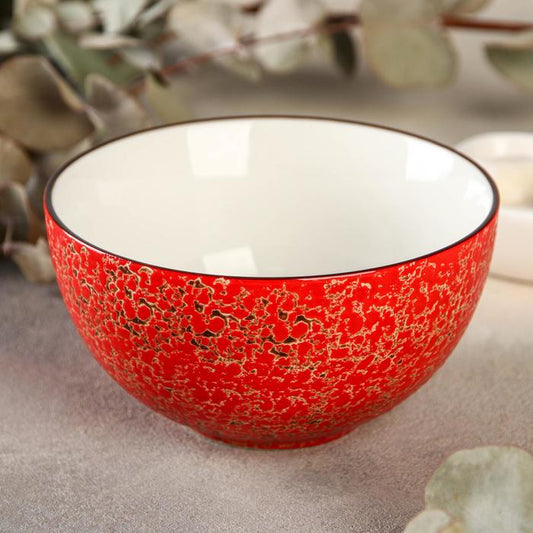
Small textured bowls — sauces, olives, dips and condiments
Long rectangular plates — crudo, vegetables, skewers
Pedestal or footed pieces — bread or dessert when the table needs height
Individual side plates — deliberately simple, because the serving pieces are doing the visual work
```This is where tabletop design stops being merely decorative.
It becomes choreography.
🌈 Matching Everything Is Not Required
In fact, a perfectly matching set can sometimes make a shared table feel more formal than necessary.
A progression invites a more collected approach.
Cream dinner plates.
Olive-green serving bowls.
Terracotta accents.
Smoked glass.
One dramatic hand-finished platter.
The slight variation makes the table feel layered and lived-in rather than staged.
Think beautiful Mediterranean dinner with friends, not conference luncheon in Ballroom B.
👨🍳 It Also Gives the Chef More Freedom
A progression doesn't have to mean every table receives precisely the same thing forever.
Restaurants can retain a structure while adapting dishes to seasonality, availability and appetite.
The summer progression might center on tomatoes, seafood and grilled vegetables.
Autumn can move toward mushrooms, squash and roasting.
Winter can become braises, breads and large-format comfort dishes.
Spring gets peas, asparagus, herbs and all the tiny green things that cause chefs to become visibly excited.
The narrative stays intact while the menu remains alive.
💬 Every Plate Creates a Conversation
There is another reason shared dining can be memorable: people experience the food together.
When four people simultaneously taste the same dish, reactions bounce around the table.
“That sauce.”
“Try this with the bread.”
“I thought I hated fennel.”
“Who took the last potato?”
These tiny exchanges turn a sequence of dishes into a collective experience.
That's difficult to reproduce when everybody is politely concentrating on a different plate.
🕯️ The Atmosphere Can Become Softer Too
Once service stops revolving around the presentation and clearing of individual plates every few minutes, restaurants can experiment with a less formal rhythm.
The meal can breathe.
Plates overlap.
Wine remains on the table.
Guests linger over the final pieces of bread.
Servers can still guide the experience without having to narrate every radish.
Hospitality starts to feel less like a performance at the guest and more like someone taking very good care of dinner.
🍰 Dessert Might Be Where Sharing Works Best
We need to discuss a long-standing restaurant fiction:
“I'll just have one bite of yours.”
Nobody means one bite.
Sharing progressions can acknowledge reality and simply design dessert for the table.
Imagine three contrasting desserts arriving simultaneously:
🍫 A dark chocolate tart with sea salt.
🍓 Strawberries with vanilla cream.
🍋 A bright citrus semifreddo.
Different serving pieces. Several spoons. Everybody tastes everything.
Civilization advances.
🏠 And This Format Translates Perfectly to Home Entertaining
The sharing progression isn't only a restaurant idea.
It's also an extremely sensible way to host dinner.
Instead of trying to make every component finish cooking at exactly 7:43 p.m., organize the evening in waves.
Start with olives, cheese and something crisp.
Bring out a salad and one warm appetizer.
Follow with pasta or a beautiful main dish for the table.
Add two vegetable sides.
Clear only what you need to clear.
Put dessert in the middle.
Open another bottle.
Congratulations—you hosted dinner and were actually present for it.
🌍 Of Course, Communal Dining Isn't Actually New
There is an important reality beneath the trend language: eating from shared dishes is hardly a modern restaurant invention.
Family-style and communal dining traditions are fundamental to countless cultures and cuisines around the world.
One chef interviewed about current share-plate menus pointed out that the format isn't particularly new at all; for many Asian and Middle Eastern families, communal dishes are simply how people have always eaten at home.
What's changing is the way more contemporary restaurants are adapting that instinct for sharing into deliberately paced, chef-led experiences.
The innovation isn't sharing food.
Humans figured that part out quite some time ago.
It's using sharing as the architecture of a modern restaurant meal.
✨ The Bigger Shift: From “Look What the Chef Made” to “Look at This Table”
Fine dining traditionally focused attention on the individual plate.
The plate was the artwork.
Don't touch it until everybody's has arrived.
Sharing progressions move the visual and emotional focus outward.
Now the artwork can be the entire table.
The food.
The ceramics.
The glasses.
The hands reaching in.
The half-finished bottle of wine.
The plate everyone unexpectedly loved sitting in the middle with exactly one bite remaining.
That is a very different picture of luxury.
Less perfection.
More life.
🥂 Final Bite: Maybe the Future of Fine Dining Feels More Like a Great Dinner Party
The formal tasting menu will always have a place.
Sometimes we want the full performance: the precision, the surprise, the procession of tiny plates and the sense that we've handed the evening completely over to the kitchen.
But not every special meal needs to feel like attending a very delicious ceremony.
The sharing progression offers another possibility.
A chef can still tell a story.
The restaurant can still create drama.
The food can still be meticulous and beautiful.
But guests get to reach across the table, tear the bread, pass the platter, choose another spoonful and decide together which dish deserves an immediate second order.
Maybe that's the luxury diners increasingly want:
not less thoughtful dining—just dining that feels a little less serious about itself.
Pass the plate. Keep the progression. Lose the stiffness. 🍷✨
```The friendliest restaurant format might simply be the one that makes the whole table part of the experience.
```SEO Keywords: sharing menu, shared plates restaurant, sharing progression, restaurant dining trends, 2026 restaurant trends, tasting menu alternatives, family style dining, communal dining, restaurant menu trends, fine dining trends, shared dining experience, restaurant tableware, restaurant plating ideas, family style restaurant menu, large format dining, chef tasting menu, modern restaurant concepts, experiential dining, group dining, dinner party style dining.