🥜🍜 Peanut Butter Ramen Sounds Wrong—Until You Try It

The creamy noodle hack turning instant ramen into a glossy, spicy, savory bowl that tastes far more sophisticated than its pantry ingredients have any right to.
```There are certain food combinations that make immediate sense.
Tomato and basil. 🍅🌿
Chocolate and hazelnut. 🍫
Bread and butter. 🥖
And then somebody looks at a packet of instant ramen, looks at a jar of peanut butter and says:
“Yes. These two should meet.”
Your first reaction may be skepticism.
Your second may be concern.
Your third, after tasting it, is very likely: “Oh. Wait. Why is this actually good?”
Welcome to peanut butter ramen—the gloriously simple noodle upgrade built around one of the internet's favorite culinary formulas: take an inexpensive pantry staple, add one unexpected ingredient and somehow end up with dinner that tastes considerably more luxurious than the grocery bill suggests.
Creamy, salty, nutty, spicy and deeply satisfying, peanut butter ramen belongs to the increasingly popular world of instant noodle hacks that turn the humble ramen packet into something more customizable, photogenic and restaurant-inspired.
Best of all?
The transformation can happen in approximately the amount of time it takes you to reconsider every insulting thing you've ever said about instant noodles.
“Peanut butter ramen sounds like something invented at 1:17 a.m. It tastes like somebody planned it.”
🥜 So… Why Does Peanut Butter in Ramen Actually Work?
Once you stop imagining a spoonful of sweet peanut butter floating sadly in chicken-flavored broth, the idea becomes much easier to understand.
Peanut butter is essentially a ready-made source of fat, roasted nuttiness and creamy texture.
Combine it with salty soy sauce, something acidic like lime or rice vinegar, a little heat from chili oil or sriracha and hot noodle water, and it transforms.
The thick peanut butter loosens into a glossy sauce that clings to every noodle.
Suddenly you're not eating “ramen with peanut butter.”
You're eating spicy, savory peanut noodles.
Very different public relations strategy. 😌
Adds richness, body and roasted flavor.
Cuts through the richness with heat and aromatic spice.
Provides salt and savory depth.
Adds brightness so the sauce tastes rich rather than heavy.
🍜 The Formula Is Almost Suspiciously Easy
The basic version requires very little culinary commitment.
Cook your noodles.
In the bowl, combine peanut butter with soy sauce and something spicy.
Add a splash of hot noodle water and stir.
The sauce changes almost immediately from thick peanut paste into something silky and glossy.
Toss in the noodles.
Dinner.
You can absolutely stop there.
Of course, nobody on the internet has ever stopped there.
🥢 A Simple Peanut Ramen Sauce
```🥜 Creamy peanut butter
🥢 Soy sauce
🌶️ Chili crisp, chili oil or sriracha
🍋 Lime juice or rice vinegar
💧 A little hot noodle water
Optional but highly encouraged: garlic, ginger, sesame oil and a tiny touch of honey.
```No complicated reduction.
No roux.
No chef standing beside the stove whispering, “The emulsion is nearly ready.”
Just peanut butter and noodle water doing extraordinary things together.
🌶️ Chili Crisp Is Peanut Butter's Best Friend
If peanut butter supplies the velvet, chili crisp supplies the drama.
Creamy peanut sauces can become heavy if everything in the bowl is soft, rich and sweet-leaning.
Chili crisp solves several problems at once.
It brings heat.
It brings crunch.
It brings those beautiful pools of red oil that immediately make a bowl of beige noodles look approximately 700% more exciting.
Add sliced scallions and suddenly the entire dish has a color palette.
We are no longer cooking dinner.
We are art directing dinner.
🍋 The Secret Ingredient Is Actually Acidity
Peanut butter gets the headline, but lime juice or rice vinegar may be the ingredient quietly making the entire bowl work.
Rich ingredients need contrast.
Without acidity, peanut noodles can become dense and one-note.
Add a squeeze of lime and everything wakes up.
Suddenly the peanuts taste nuttier, the chili tastes brighter and the soy sauce tastes more savory.
This is why the best version of the dish isn't simply creamy.
It's creamy + spicy + salty + sour + crunchy.
Basically, the bowl is overachieving.
🥚 Then Come the Toppings
This is where peanut butter ramen stops looking like an emergency pantry meal and starts looking like something you might happily pay for.
The sauce gives you the foundation.
The toppings give you texture, freshness and visual contrast.
✨ Build the Ultimate Peanut Butter Ramen Bowl
```🥚 Jammy soft-boiled egg
🌿 Cilantro or fresh herbs
🥒 Cucumber ribbons
🥜 Crushed roasted peanuts
🌶️ Chili crisp
🧅 Sliced scallions
🥬 Bok choy or greens
🍋 Fresh lime
🍗 Shredded chicken
🌱 Crispy tofu
```The smartest toppings contrast with the sauce.
If the noodles are creamy, add crunch.
If they're spicy, add something cool.
If they're rich, add citrus and herbs.
If the bowl is entirely brown?
Please add a scallion. We are begging you.
🍲 Brothy or Saucy? Both Camps Have a Point
Peanut butter ramen can move in two very different directions.
🥢 The Saucy Version
Use only enough noodle water to create a thick, creamy sauce that coats the noodles.
The result is rich and intensely flavored—somewhere in the delicious territory between spicy peanut noodles and dressed instant ramen.
This is also arguably the more photogenic version.
Glossy noodles curling dramatically around chopsticks rarely hurt anyone's social-media strategy.
🍜 The Brothy Version
Add more broth and the peanut butter gives the soup body, creating something creamy without necessarily requiring dairy.
Miso, vegetable stock, mushrooms, garlic and ginger work especially well here.
Finish with a dramatic swirl of chili oil.
Because if you're going to eat peanut butter soup voluntarily, it deserves excellent presentation.
🍄 Peanut Butter + Miso = The Upgrade to the Upgrade
One of the most interesting directions for peanut ramen is adding miso.
Peanut butter contributes richness and roasted nuttiness, while miso adds salty, fermented depth.
Together, they create a broth that tastes surprisingly complex for something assembled from refrigerator-door ingredients.
Add garlic, ginger, mushrooms and chili oil and the humble ramen packet has now gone through a complete personality transformation.
It left home wearing sweatpants.
It returned wearing a tailored coat.
🍽️ Why Restaurants Should Pay Attention
The appeal of peanut noodles goes beyond a fun home-cooking trick.
The underlying formula fits several things diners currently love: comfort, customization, bold sauces, recognizable ingredients and playful menu descriptions.
A restaurant doesn't need to literally serve instant noodles with a spoonful of supermarket peanut butter.
Instead, the trend can inspire more polished variations.
👨🍳 Restaurant Menu Inspiration
```🌶️ Spicy Peanut Ramen with chili crisp and jammy egg
🍄 Peanut-Miso Mushroom Noodles
🍗 Sesame-Peanut Chicken Ramen
🌱 Crispy Tofu Peanut Noodles
🥒 Chilled Peanut Noodles with cucumber and herbs
🔥 Gochujang Peanut Noodle Bowl with scallions and sesame
```These dishes can feel familiar enough to order confidently while still offering that crucial little moment of curiosity.
Peanut butter? In ramen?
Exactly.
Curiosity sells appetizers, desserts and apparently noodles too.
🎨 The Bowl Is Part of the Recipe
Peanut ramen is delicious.
It is also, technically speaking, a bowl full of tan noodles.
This is where tableware earns its salary.
Choosing the right bowl can transform the dish from late-night dorm-food energy into modern comfort-food presentation.
| Tableware | Why It Works | Best Garnish |
|---|---|---|
| Deep Black Bowl 🖤 | Makes golden noodles and green herbs pop | Chili oil + scallions |
| Cream Stoneware 🤍 | Soft, contemporary restaurant look | Cilantro + black sesame |
| Deep Blue Ceramic 💙 | Contrasts beautifully with peanut tones | Lime + cucumber |
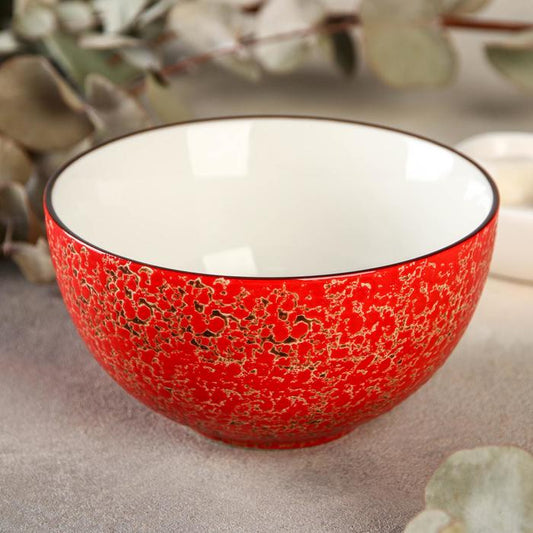
| Rust or Terracotta Bowl 🧡 | Creates a warm, earthy comfort-food mood | Peanuts + chili crisp |
Wide bowls work particularly well because they give toppings room to remain visible.
Nobody wants to carefully arrange a beautiful jammy egg only to have it sink to the bottom like a tiny protein-rich submarine.
📸 How to Make Peanut Butter Ramen Extremely Photogenic
The secret is contrast.
Peanut noodles naturally live in a warm palette of beige, tan and gold.
Add just a few saturated colors and the bowl changes completely.
🔴 Red: chili oil, sliced chili, gochujang
```🟢 Green: scallions, cilantro, cucumber, bok choy
🟡 Yellow: jammy egg yolk, lime, corn
⚫ Black: sesame seeds or dark ceramic tableware
🤍 White: sesame, tofu or a pale ceramic bowl
```Then lift a bundle of glossy noodles with chopsticks.
Congratulations.
You now own a food blog.
🥒 Peanut Noodles Don't Even Have to Be Hot
The same sauce works beautifully with chilled noodles, which makes the trend especially useful beyond cold-weather comfort food.
Toss cooled noodles with peanut sauce, cucumber, shredded carrots, herbs and chili crisp.
Suddenly you've moved from cozy ramen night to something that feels almost picnic-ready.
Add shredded chicken or tofu and it becomes an easy lunch.
Add extra herbs and crunchy vegetables and it becomes surprisingly fresh.
Put it in a beautiful shallow bowl and everyone assumes there was a plan.
🌶️ Five Ways to Take the Trend Further
Sweet heat, fermented depth and a gorgeous red-orange sauce.
Rich, savory and ideal for a brothier noodle bowl.
Fresh and bright enough for warm-weather menus.
Extra creamy with a slightly sweet, aromatic finish.
The easiest version and possibly the hardest to stop eating.
🏠 Why Home Cooks Love It
Peanut butter ramen succeeds partly because it respects a reality that many food trends conveniently ignore:
Sometimes people are hungry now.
Not after soaking something overnight.
Not after reducing a sauce for 90 minutes.
Now.
Instant noodles already solve that problem.
Peanut butter simply makes the solution creamier.
The ingredients are inexpensive, the recipe is flexible and measurements are forgiving.
No lime?
Use vinegar.
No chili crisp?
Use sriracha.
No fancy ramen?
The packet that's been hiding behind the cereal since February is about to experience personal growth.
🥢 The Bigger Trend: Pantry Food Is Getting a Glow-Up
Peanut butter ramen belongs to a broader style of cooking that treats inexpensive convenience foods as foundations rather than finished products.
Instant noodles can become a blank canvas.
Add eggs.
Add chili crisp.
Add greens.
Add miso.
Add peanut butter.
The point isn't to pretend instant ramen is something it isn't.
The fun comes from seeing how dramatically a familiar ingredient can change with two or three smart additions.
It is low-effort experimentation with an unusually high success rate.
🍜 A Restaurant-Worthy Peanut Ramen Bowl
The Perfect Bowl
```Silky peanut-miso broth
✦
Springy ramen noodles
✦
Jammy egg
✦
Bok choy + mushrooms
✦
Crushed peanuts + scallions
✦
A completely unreasonable amount of chili crisp 🌶️
```✨ Final Slurp: Don't Judge the Jar
Peanut butter ramen represents exactly the kind of food trend that thrives because it challenges expectations without making dinner difficult.
The combination sounds questionable.
The technique is almost embarrassingly easy.
And the finished bowl is creamy, spicy, savory, customizable and deeply comforting.
For home cooks, it's a five-minute pantry transformation.
For restaurants and cafés, it's inspiration for playful noodle bowls that combine comfort-food familiarity with bold global flavors and highly visual presentation.
And for anyone still staring suspiciously at the peanut butter jar?
We understand.
We were skeptical too.
Then the chili oil went in.
🥜 + 🍜 = 🤨
```One bite later: “Okay, I get it.”
Sometimes the strangest pantry combination is exactly the dinner you didn't know you wanted.
```